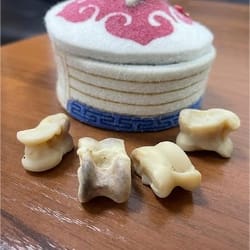







I met it again last summer on a jailoo, when the evening wind finally cooled the day and everyone drifted toward the yurt like it was the only warm idea left on the mountain. Someone poured tea, someone sliced bread, and then—almost casually—a small pile of chuko (sheep knucklebones) appeared on the felt carpet. No big announcement. No “ladies and gentlemen.” Just that familiar Kyrgyz look that means: sit down, you’re about to learn something the old way.
Upai is an old Kyrgyz game played with alchiks/chuko—simple bones that somehow carry a whole childhood inside them. The funny part is how quickly it stops being “cute.” You hear the bones click on the felt, and suddenly everyone is calculating angles like they’re running a chess match—only with tea cups and laughter as the commentary.
Here’s the heart of it. The bones are counted in sets: three bones make one “upai” (also called a basym), and the goal is to collect more of these sets than your opponent. Among the pieces, one special bone is chosen as the khan—usually larger and marked or painted so everyone can spot it instantly. That khan changes the mood. The moment it lands in the middle, you can feel the room tighten a little: now it’s not just luck, it’s precision.
The game can be played indoors or outside, but it loves a surface with grip—traditionally a floor covered with a felt carpet, where the bones slide just enough to punish sloppy hands and reward clean shots. Players go one by one, trying to strike and gather bones, building up their “score” in upais. In the beginning, tourists lean in like it’s a folk museum exhibit. Ten minutes later, they’re holding their breath like it’s the final of a tournament.
What I like most about Upai is what it says about us. Nomads didn’t always have spare things—so we learned to make games from what life gave us. Bones from dinner become a sport. A felt carpet becomes a playing field. And the real prize isn’t money; it’s reputation. If you play well, even the elders nod with that quiet approval that feels better than applause.
And if you lose? Well—drink your tea, smile, and ask for a rematch. In Kyrgyzstan, tradition is patient, but it never forgets a good rival.