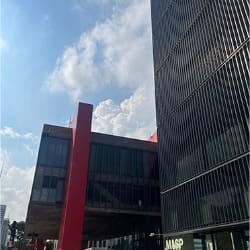







Here, ancient Roman ruins linger silently amidst the long shadows of glass-covered skyscrapers, with a presence that seems almost invisible. When I first saw the high-rises built right next to the historical stone buildings, the stark contrast made me feel uneasy—but now, whether it’s because my perspective has changed or I’m simply used to it, I’ve come to love it as an expression of the true character of Milan.

Milan is always growing and highly sensitive to change, reinventing itself time and again as fresh capital and new ideas flood in from the rest of the world. So much so that it’s often referred to as “the least-Italian city in Italy.” But far from being an insult, it’s a saying that epitomizes the city’s energetic approach to the future and willingness to embrace what’s next.

Still, Milan doesn’t have the best reputation. It’s always ranked as having some of the worst air pollution in Italy, along with heavy crime. One reason is that it’s a place where immigrants, refugees, and undocumented residents tend to congregate, and people tend to point to the several systemic issues that create loopholes in the structures that deal with non-Italians. And yet, the city is always in motion. Though it may be besieged by problems and contradictions, it always seems to have the energy to undergo the next transformation.
Problems aside, one of the most attractive things that has come from Milan’s dynamism in recent years has been the slew of one-off events, art and music exchange nights, and extensive pop-up galleries—despite its established art museums and luxury brand districts.
The name “Milan” is said to come from an old Celtic word meaning “continental center”. It was a critical holding in ancient Rome, and flourished as a center of trade and culture during the Renaissance. Today, it has welcomed many of the finance companies that moved out of London in the wake of Brexit, and may once again be reestablishing itself as a hub of the European financial scene.
Milan treasures its past while keeping its eyes firmly on the future. Just across from ancient stone buildings are the quiet seeds of new technologies and innovative designs, as art, business, craftsmanship, and cutting-edge ideas effortlessly intertwine to create the harmony that is one of the city’s biggest draws.
Right next to its flamboyant fashion shows and design demonstrations are cafés where artisans engage in early-morning conversation over espresso, businessmen hover over laptops during midday, and young people chat surrounded by music and wine in the evenings. It’s all part of yet another vibrant day in Milan.