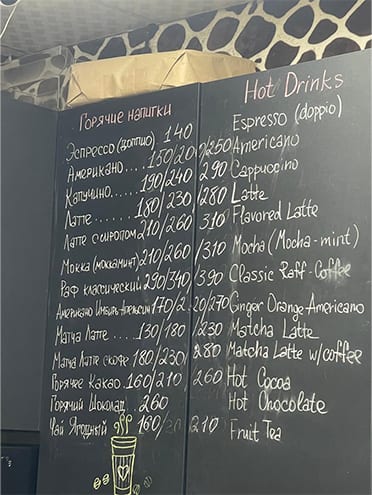







I used to think it was just about taste. Strong or mild, sweet or bitter. But over time—and across different cities, airports, and long, reflective mornings—I realized it is less about coffee itself and more about rhythm, mood, and even a certain philosophy of how you approach the day.
Coffee as a Personal Ritual
I rarely rush my coffee. Even when I am in transit, between flights or meetings, I try to create a small pause around it. A moment that belongs only to me. Perhaps that is why I started paying attention not just to having coffee, but to what kind of coffee I choose.
Because each type carries its own character.
Americano: Clarity and Structure
The Americano is probably the most straightforward expression of coffee. Espresso diluted with hot water—nothing more, nothing less.
It feels efficient. Almost managerial.
There is no distraction here—no milk to soften the edges, no foam to decorate the surface. Just a clean, direct taste that gets straight to the point. I tend to associate Americano with early mornings when the agenda is clear and the day requires focus.
It’s the kind of coffee that says: let’s proceed.
Espresso: Precision in a Cup
If Americano is clarity, then Espresso is intensity. A small cup, a concentrated experience.
There’s something almost symbolic about it. You don’t sip espresso absentmindedly—you engage with it. It demands attention. Strong, sometimes sharp, but undeniably honest.
I don’t order it often, but when I do, it feels deliberate. Like making a decision quickly and standing by it.
Cappuccino: Balance and Tradition
Then there is the Cappuccino—arguably the most classical of them all. Equal parts espresso, steamed milk, and foam.
This is balance in its purest form.
The foam adds texture, the milk softens the intensity, and the espresso remains at the core. It reminds me of old European cafés where time moves a little slower and conversations stretch longer than planned.
Cappuccino feels… composed. Structured, but not rigid.
Latte: Comfort and Continuity
The Latte is different. More milk, less intensity, a smoother and more forgiving profile.
If espresso is a statement, latte is a conversation.
It doesn’t demand your full attention, yet it stays with you. It works in the background—during a meeting, while reading, or even when you’re simply watching people pass by in an airport lounge.
There is something quietly reassuring about a latte. It doesn’t try to impress. It just delivers consistency.
Flat White: Subtle Confidence
Somewhere between espresso and latte sits the Flat white. Less foam than a cappuccino, stronger than a latte.
It’s a coffee that feels understated but confident. No unnecessary elements, no exaggeration. Just a refined balance between strength and smoothness.
If coffees had personalities, flat white would be the one that doesn’t speak much—but when it does, people listen.
Macchiato: A Hint of Contrast
The Macchiato is espresso “stained” with a small amount of milk. It’s a minimal adjustment, but it changes the experience.
This is a coffee of nuance. It keeps the intensity but introduces just enough softness to round the edges.
I think of it as a compromise that doesn’t feel like one.
What Really Sets Them Apart
At a technical level, the differences between these coffees are simple: the ratio of espresso, milk, water, and foam.
But in practice, those ratios create entirely different experiences:
Americano — diluted strength, clarity, and volume
Espresso — concentrated intensity, quick impact
Cappuccino — structured balance, traditional feel
Latte — smoothness, comfort, and longevity
Flat white — refined strength, minimalism
Macchiato — contrast, subtle complexity
It’s almost like different communication styles. Some are direct, some are layered, some are designed to last longer.
Coffee in Transit
Interestingly, I notice my preferences most clearly when I travel. Airports have a way of stripping choices down to essentials. You don’t overthink—you select what feels right in that moment.
One place where this becomes a small but consistent ritual for me is Istanbul Airport.
There is something about being in transit—between destinations, between responsibilities—that makes a simple cup of coffee feel more significant than usual.
And almost without exception, I find myself walking into Starbucks.
A Personal Conclusion
After trying different types, in different cities, under different circumstances, my choice has become quite predictable.
I prefer a latte.
Not too sweet, not too strong—just balanced. Usually with a moderate amount of sugar. Enough to soften the taste slightly, but not to overpower it.
It’s not the boldest option, and certainly not the most complex. But it aligns with how I like to approach things: steady, consistent, and without unnecessary extremes.
And so, whenever I have a transfer in Istanbul, I follow the same routine. I order a latte at Starbucks, find a seat, and take a moment.
No rush. No urgency.
Just a cup of coffee—and a brief pause before the next destination.