






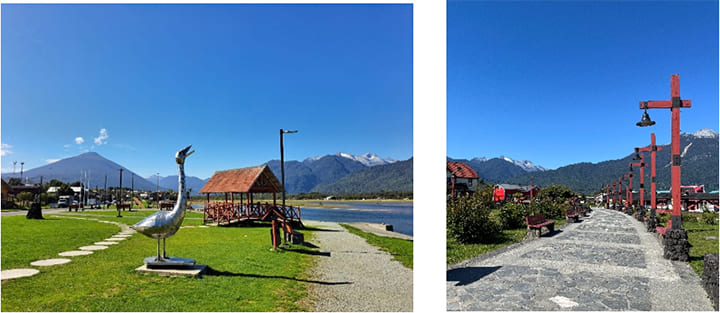
Hornopirén is surrounded by forest, and with nearby Hornopirén Volcano (1,572 m) rising up above the horizon, I did feel a little uneasy thinking I had probably never stayed so close to a volcano before, but all the same, I did enjoy the scenery. The owner of the inn where we stayed, who was born in Hornopirén, told me the volcano last erupted about 200 years ago and it’s been dormant ever since, so there’s nothing to worry about. There was a beautiful park in the center of the village. Taking a walk through the quiet village was calming.
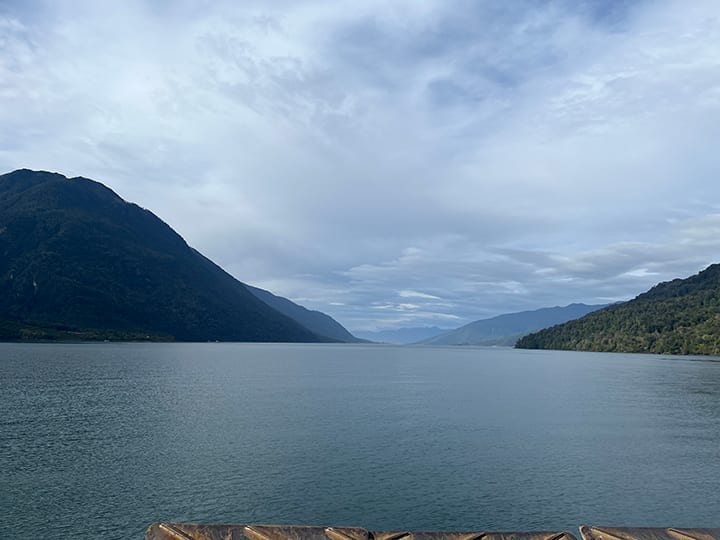
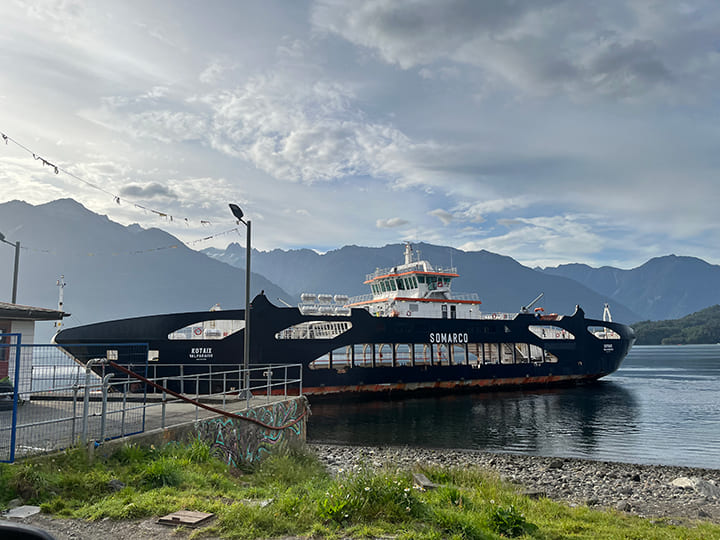
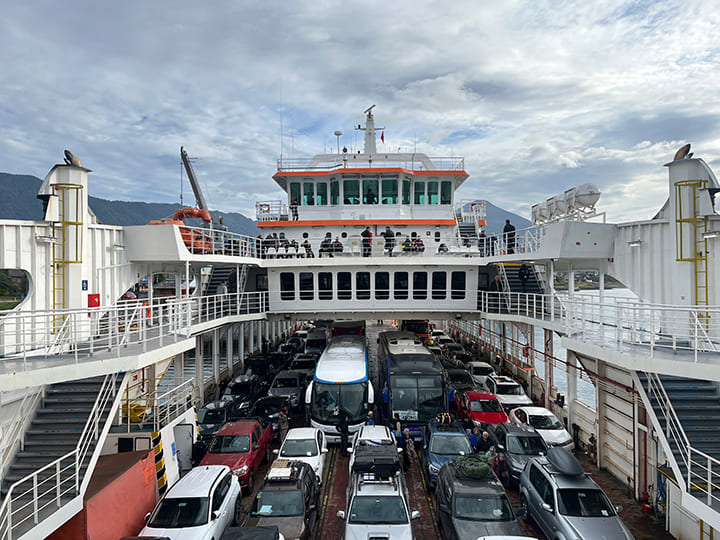
The next day, we took a three-and-a-half-hour ride on a large Somarco ferry to get to the town of Chaitén. Navigating through the fjord landscape, I found the ferry was larger than I had imagined, I didn’t feel any rocking at all, which made it a comfortable ride. In just a few hours, we experienced the kind of weather so typical of Chilean Patagonia: the sun came out, it clouded over, and it rained. Even under cloudy skies, the scenery was magnificent.
By the time we arrived in Chaitén, the sun had come out again, as if the town were welcoming us. About 10 km northeast of the town is Chaitén Volcano, which suddenly erupted in 2008. The ash plume rose more than 16 km into the sky and was carried by the wind for hundreds of kilometers, covering much of Patagonia in ash. I remembered seeing news at the time about airports and roads in neighboring Argentina being closed because of the eruption. Chaitén Volcano is apparently still active today. Volcanoes stayed on my mind throughout this journey.
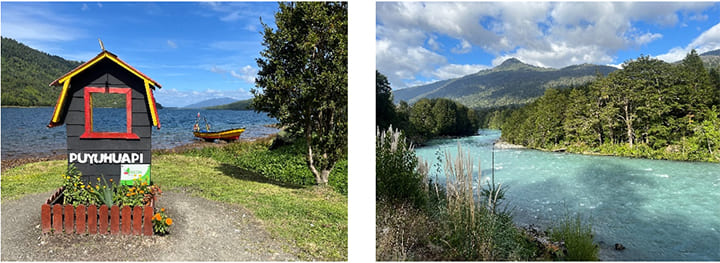
Leaving Chaitén, we went through the peaceful village of Puyuhuapi. Nearby is Queulat National Park, where you can see the famous Ventisquero Colgante, or Hanging Glacier. I made sure to etch the sight of the blue glacier hanging from the sheer cliffs firmly into my memory.
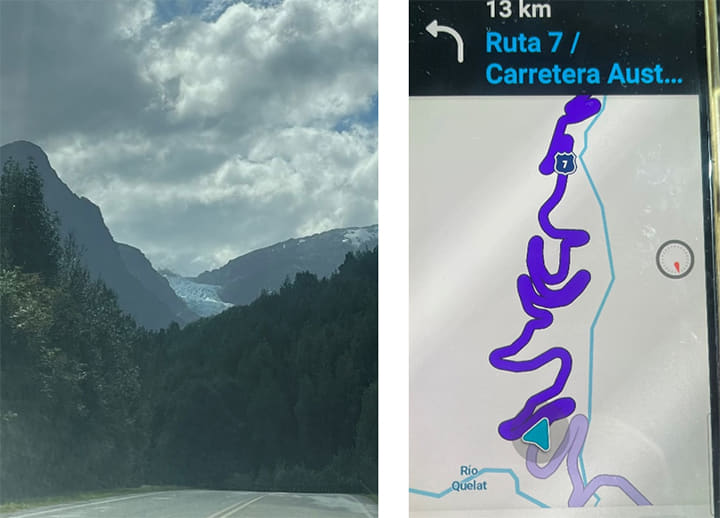
At this point, the Carretera Austral continued its winding route, climbing and descending through the Andes. We saw fewer cars on the road, just the occasional travelers on motorcycles, in camper vans, and some even on bicycles. It’s amazing to see bicycle riders in Patagonia because the weather changes so quickly.
There were a lot of shops in the bustling center of Coyhaique. A waiter at the restaurant where we had dinner had apparently lived in Brazil some years earlier, and he kindly told us in fluent Portuguese about the area around Coyhaique and how harsh the winters can be.
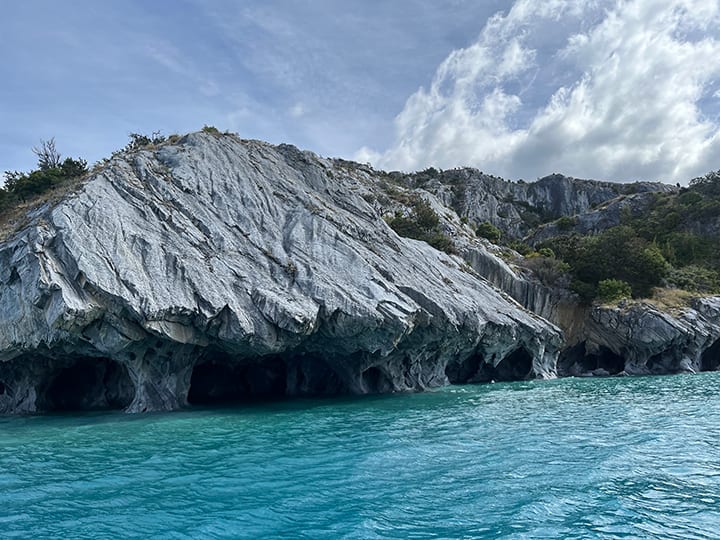
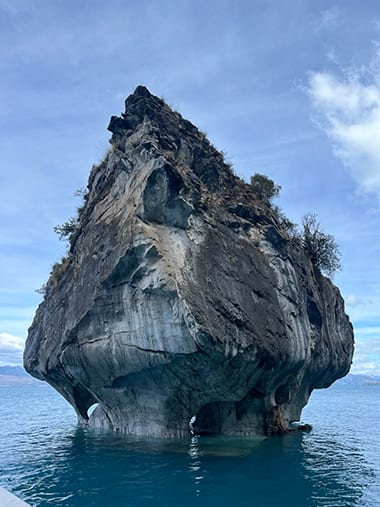
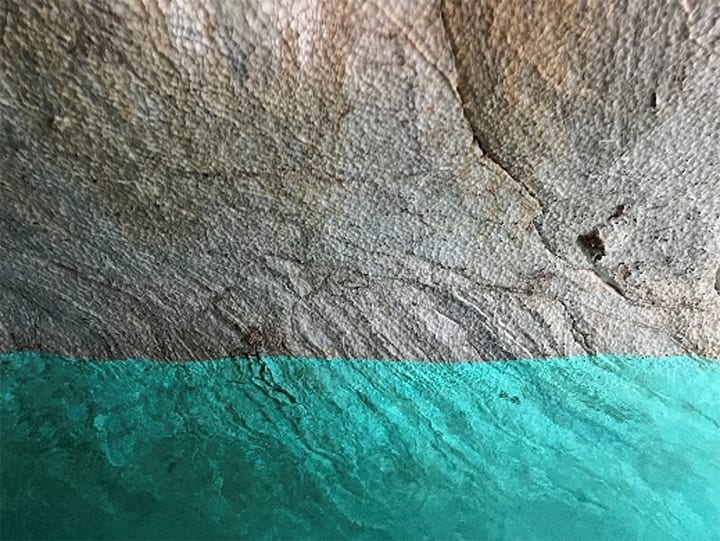
Continuing farther south, we got to Puerto Río Tranquilo. Seeing the Marble Cathedral had long been a dream of mine. The Marble Cathedral is located on General Carrera Lake, which straddles the border between Chile and Argentina. We went on a boat tour for about ten people and cruised along the lake, which was so vast it looked like the sea, until we came upon a cave made of marble. I was amazed by the marble patterns and by the crystal-clear water, which shifted from emerald green to blue depending on the light. It looked almost as if the colors had been painted on. The boat took us right into the cave, and in some places, we could even touch the rock. I was in awe the whole time and left completely satisfied.
Since leaving Puerto Montt, we had traveled about 900 km to reach this point. From here, we would begin the journey back toward São Paulo. The Carretera Austral is known as the world’s most scenic road trip route. The Andes Mountains, the crystal-clear rivers, the vast wilderness, and the miles of unpaved roads—it was all an unforgettable, breathtaking experience.