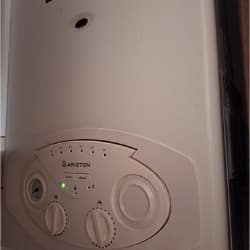







The latter, an independent heating system, is a system managed entirely by the owner of a single residential unit. In a building with an independent heating system, each apartment will have its own boiler and a thermostat allowing for personalized management of the system.
An independent system allows the apartment owner to activate the heating according to their needs, without any specific restrictions other than those required by current legislation such as yearly checks by a professional technician. The water circulating in the radiators is indeed heated by a private boiler installed in each apartment, while the temperature and time of day are set via a thermostat.
Such boiler is subject to yearly checks that must be certified.
The independent heating system has several advantages in my opinion.
Having your own heating management allows you to adapt energy consumption to your needs, avoiding waste during periods when, for example, no one is home. Furthermore, you can turn on the system even before or after the legally required date (otherwise the building manager will follow local and national guidelines regarding when to start using the heating and when to turn it off at the end of the cold season), if there is no real need or if, for example, the apartment is also equipped with air conditioning that allows you to heat the home in the early autumn days without resorting to gas heating.
Furthermore, an independent system also allows you to consider alternative heating solutions, such as electric heating or pellet-fed stoves.
It goes without saying that by using the independent system carefully and efficiently, you can reduce your gas consumption and your utility bills during the winter months.
Among the disadvantages of this form of heating is undoubtedly boiler management and maintenance: the law requires mandatory periodic boiler maintenance as aforementioned, which entails costs for checks and possible expenses for extraordinary maintenance in the event of boiler failure or replacement but that does not happen very often as a boiler normally has a life span of about twenty years.
With the central heating system, on the other hand, the boiler is shared by all the units in the building. It is generally installed in a common area, such as the basement of the building so everyone can check it if needed.
Until a few years ago, the boiler's operation and radiator temperature were managed by a technician and were the same for all building inhabitants, inevitably resulting in energy waste or temperature-related inconveniences, as everyone was required to maintain the legally required temperature in their homes.

Typical boiler in independent house
In recent years, the installation of thermostatic valves has become mandatory, allowing each resident to independently adjust the operation and temperature of each radiator in their home. This allows each resident to decide to turn off the heating when they are not home or to maintain slightly lower or higher temperatures depending on their needs.
In addition to the valves, some apartments are now equipped with a heat metering system, which allows for the apportionment of consumption costs by charging each owner only for the raw material actually used but this is still far from being the norm.
The result is that you may turn off the heating in your apartment to be environmentally savvy or because you are not at home but, eventually, you will be charged for the same cost as your neighbors anyway.
Management of the system remains at the building level and any decisions regarding extraordinary maintenance or modernization are subject to a resolution of the building meeting.
Even if, for whatever reason, a member does not use the heating for the entire season, they will be obligated to pay all costs including maintenance and costs related to heat loss.
There is no absolute best choice but I believe that a centralized system could be a winning choice only for those with very high consumption and who don't want to worry about managing all the ordinary and extraordinary boiler operations themselves.

Typical heater