






Today, ceviche is known around the world as one of Peru’s representative dishes. In 2023, it was even added to UNESCO's Intangible Cultural Heritage list. On top of that, June 28 has been officially designated as National Ceviche Day, or Día Nacional del Ceviche, and restaurants and markets across Peru mark the occasion in festive style.
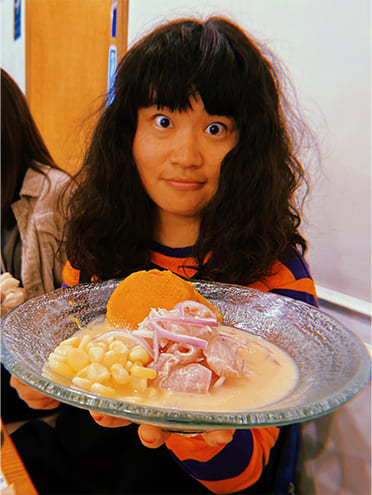
Has ceviche really been around for 2,000 years?
Ceviche’s history goes a long way back, more than 2,000 years, according to some accounts. In the coastal regions of ancient northern Peru, fishermen are thought to have seasoned freshly caught fish seasoned with sea salt and sour fruits. Over time, that seems to have evolved into the ceviche we know today: curing fish with citrus.
The defining feature of ceviche is that the fish is “cooked” without using heat. The acid in the lemon changes the proteins in the fish, firming and whitening the surface so that it looks almost as if it has been lightly cooked.
The marinade, packed with the flavor of the seafood, is known in Peru as “leche de tigre,” or “tiger's milk.” The name already sounds powerful, and the taste lives up to it. It’s sour, spicy, packed with the umami of fish, and comes with a serious hit of saltiness as well. I once swallowed it with a bit too much enthusiasm, and the intensity made me seriously wonder, “Is this food or some kind of endurance test?” In Peru, people say it helps with hangovers, but if you’re new to it, starting with just a little bit is probably wiser.
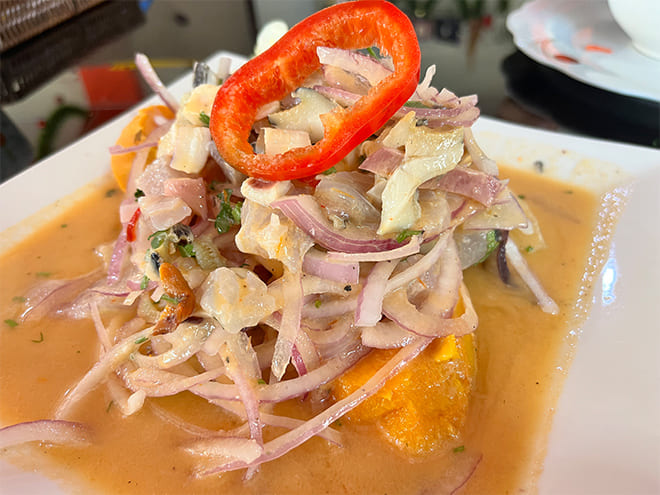
Ceviche is not merely a dish; it also reflects Peru’s geography and cultural diversity. Along the Pacific coast, it’s made with white fish, octopus, or shrimp. In the Andes, they use river fish or trout, while in the Amazon region, there are versions made with freshwater fish. The types of chilies, herbs, and citrus also vary from region to region, to the point that people say there are as many ceviches as there are places in Peru.
The supporting cast that makes the dish shine
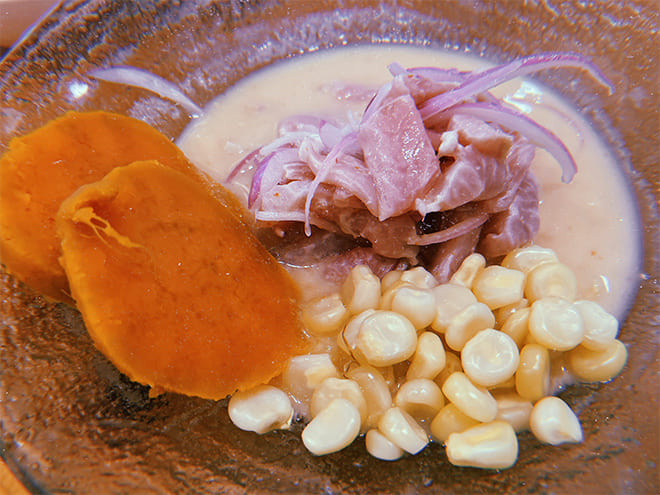
A plate of ceviche is usually served with sweet potatoes and a type of large white corn called “choclo.” At first, I thought, “Why sweet potatoes with a fish dish?” But it’s a surprisingly good match.
After the sharp acidity of the lemon, you take a bite of sweet potato. That calms everything down, and then you immediately want another bite of ceviche. It’s a perfectly balanced endless loop.
Now, choclo is completely different to the sweet corn you get in Japan. The kernels are big and fluffy, almost like beans. There are moments when I’m nibbling on choclo as I eat ceviche that make me realize, “Yep. I’m in Peru.”
The unexpected connection between ceviche and Japan
Ceviche actually has a deep connection with Japan as well.
From the late 19th century to the early 20th century, many Japanese people migrated to Peru. Those Japanese migrants worked in farming and business as they gradually settled into their local communities. One of the things they brought with them was Japan’s distinctive food culture of eating fish raw.
They say that traditional ceviche was generally marinated for much longer than it is today. However, under the influence of Japanese immigrants and their descendants, the Nikkei Peruvians, the idea of making the most of the freshness and texture of the fish itself spread, and ceviche gradually evolved into the modern dish prepared in a short time.
Many ceviches served in Peru today retain the fish’s firmness and juiciness, which to Japanese people feels somehow close to sashimi. That may be why many Japanese people say that even though they’re trying ceviche for the first time, it somehow feels familiar.
Today, Nikkei cuisine, which brings together Japanese and Peruvian food cultures, is attracting attention around the world. It combines Peruvian seafood, chili peppers, and lemon with elements of Japanese cuisine such as soy sauce, dashi, and precision cutting. This free-spirited yet refined style is highly regarded on the global culinary scene.
In fact, Lima, the capital of Peru, is home to many high-end ceviche restaurants and creative dining establishments influenced by Japanese cuisine. Japan and Peru are far apart. Yet there may be a certain shared sensibility in the way both cultures value the sea, wanting to enjoy fish at its very best.
Why do Peruvians eat ceviche at lunchtime?
In Peru, people say that ceviche is something you eat for lunch. The reason is very simple: it’s the best time to enjoy fresh fish at its peak. Fish begins arriving at markets early in the morning, and in port towns, the fish landed that morning is served as ceviche by lunchtime. That sense of the fish having speedily reached your plate from the sea may be one of the luxuries unique to a country like Peru, which enjoys an abundance of seafood.
In fact, when I ask Peruvians, “Don’t you eat ceviche at night?” many of them say, “Of course some people do, but it’s really best at lunchtime. By evening, the fish starts to lose its freshness.” Some travelers may feel a little uneasy about eating raw fish overseas. If you are worried, I recommend starting with a restaurant with a good reputation.
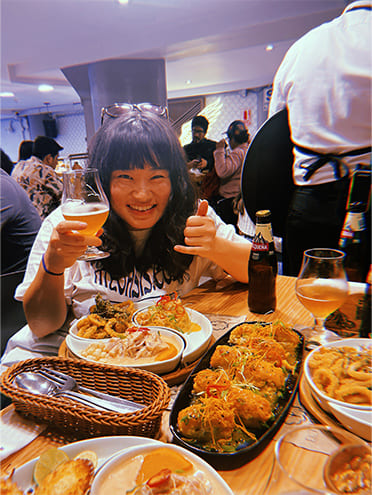
A dish that conveys a sense of Peru's sea and its people
Ceviche is more than just a fish dish. It reflects Peru’s seas, its immigrant history, the livelihoods of its fishermen, and the aesthetic idea that “fresh food should be eaten at its absolute best.”
If you ever visit Peru, be sure to stop by daytime market or a local lunch spot. Take in the sound of lemons being squeezed, the rhythm of knives slicing fish, the laughter of people all around. And by the time you’ve finished off that “sea soup” at the bottom of the dish, you’ll definitely feel a little closer to Peru itself. Well, here’s where I say “Adios!”