






Yet, there are plenty of moments when I look out at the smog-filled air, the foggy gray street corners, and the endless lines of cars on the highway and wish that I could live somewhere closer to nature.
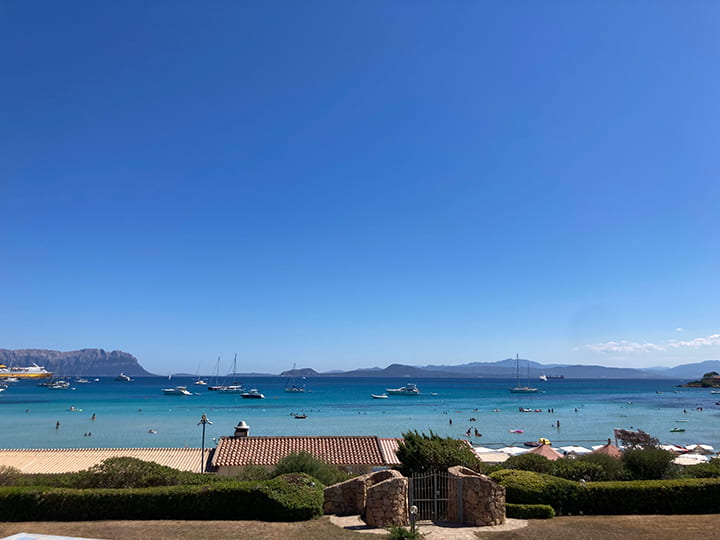
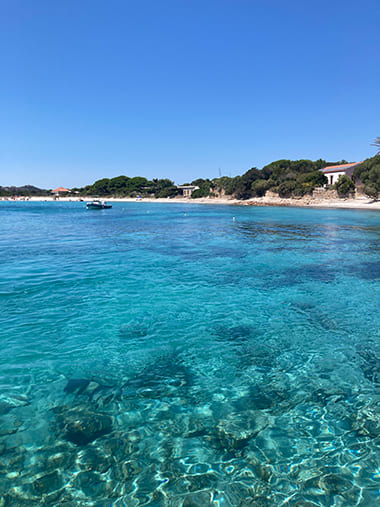
Every year, I take a ten-day summer vacation to Sardinia. And every time I’m there—surrounded by the clear blue ocean, the grasses swaying in the breeze, and the night sky littered with stars—I think the same thing. What would it be like to live here?
I’m sure anyone would think the same thing—but vacations and everyday life are different.
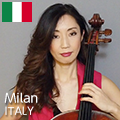
Slowly though, there are some Italians who are turning their wishes into reality. One of them is a woman named Alessandra Ciliberto, who spent many years working in Milan as a successful corporate executive. But at some point, she decided that she wanted to raise her daughter in nature and moved back to her childhood home in Stintino, Sardinia.
What made her move possible was the ability to work remotely. She negotiated with her company to go remote and part-time, which meant that she could return to the island and no longer had to be based in Milan.
The story was featured in local newspapers and became a hot topic on social media. Surprisingly though, the response was not all positive, and her decision drew criticism and negativity from many of her fellow native Sardinians.
Apparently their rancor stemmed from the idea that a Milanese executive was simply returning to the island to live a relaxed, carefree life.
But the reality certainly wasn’t all roses. She currently works in a part-time sales position, and was not simply granted permission to work remotely—it was something she had to fight for after many years of working for them. And her reason for going part-time was so that she could work around her daughter’s schedule.
Ciliberto’s husband is from Brazil and had been working in the restaurant industry in Milan, so they’re currently rebuilding their life on the island while he looks for work in his field. The fact that she talks about her move as being “not easy, but possible” hints at the amount of effort that went on behind the surface.
To me, her story again speaks to the richness of opportunity that Milan provides. I myself came here as a foreigner lacking an education in the local schools, and the city still opened many doors for me. I feel like I owe Milan for offering me so many chances to find work and pursue my activities.
So maybe Milan and Sardinia aren’t necessarily opposite worlds. One way to think about it is that the city is rich in urban opportunities, while the island is rich in natural beauty.
Moving to Sardinia would also come with practical challenges. Most of the homes in tourist areas are used for seasonal guests, so finding a place to rent would be difficult. But if you were lucky enough to find a home, you’d get twice the space for half the cost of living in Milan—so there’s no doubt you’d be comfortable.
Maybe the reason people are able to overcome the challenges associated with finding a house on the island is because everyone, without fail, looks out over the Sardinian sea and thinks, “Man, I’d love to live here.”