






This year, however, we’re still having day after day of rain.
As I’ve mentioned before, Portugal’s weather is heavily influenced by the Azores High, a massive high-pressure system that exists near the Azores islands. It typically keeps the country’s climate relatively mild and stable. The northern extension of this high-pressure system is what usually keeps Portugal’s weather dry and consistent.
Recently, though, the Azores High has weakened and shifted southward, allowing Atlantic low-pressure systems to push directly into Portugal, bringing frequent stormy conditions.
And although the wintery storm conditions have eased, we’re still having strong winds—and the dust blowing in from the Sahara Desert seems particularly bad this year.
We’re getting all of this dust from the Sahara because it’s blowing in from North Africa on strong winds caused by those Atlantic low-pressure systems.
It’s a phenomenon that’s common in spring, where the sky turns an unsettling shade of orange and visibility plummets. It looks somewhat dreamlike, almost like a scene from a movie set on the Florida peninsula, cloaked in a surreal orange haze. Of course, it’s not good for your health, and cars parked outside are coated in an orangish grime that makes an ugly grinding sound when you run your windshield wipers over it.
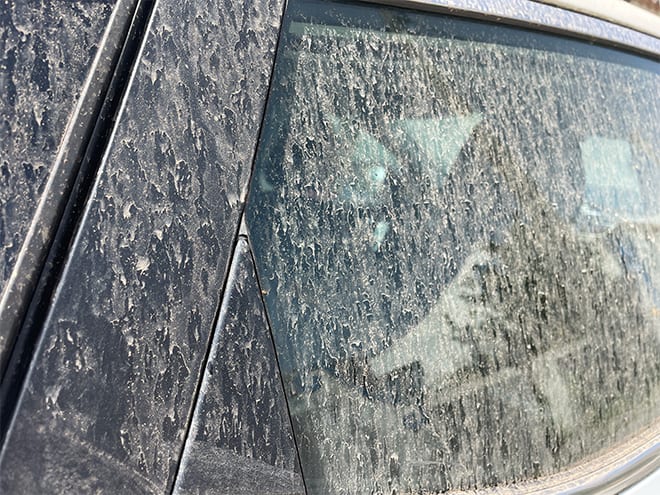
If it rains when there’s Saharan dust in the air, it makes car windows even dirtier
There’s currently no way to completely stop the Saharan dust from reaching us, but I recently learned about a large-scale international effort called the Great Green Wall Accelerator.
(https://www.unccd.int/our-work/ggwi/great-green-wall-accelerator)
The original Great Green Wall is a huge African Union project launched to combat drought, food shortages, poverty, the expansion of the Sahara Desert, and similar challenges.
At first, the idea was to create a 15-meter-wide “wall of trees” stretching 8,000 kilometers across the African continent, from Senegal to Djibouti. It has since evolved beyond this simple idea to a comprehensive land restoration project that includes reforestation, ecosystem restoration, water management, and more.
Unfortunately, the scope is so vast that the project is dealing with numerous difficulties—among them fractured efforts across countries, terrorism, and funding that largely fails to reach local communities.
In response, French President Macron led an effort at the 2021 One Planet Summit in Paris to launch the Great Green Wall Accelerator program—with the “accelerator” being a coordination mechanism designed to push the project forward.
At first glance, this may seem unrelated to the Saharan dust reaching Portugal. But the project comes with the hope that we may be able to ease at least some of the dust and extreme weather originating in the Sahara over time.
In the area where I live, this time of year typically brings large numbers of fireflies to the fields. Their tiny, glowing green lights dancing in the air look as festive as Christmas lights to me.
But this year, there aren’t as many as last year.
Maybe the fireflies are sensitive to cold and rain.
Maybe we humans aren’t the only ones longing for Portugal’s once-famous mild weather.
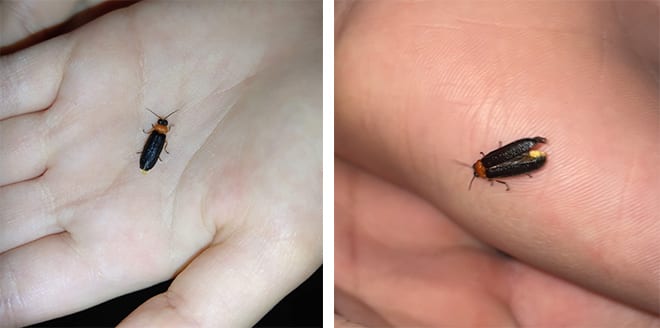
Portuguese fireflies