






Although it was long known as the city’s Chinatown, it has recently broken out of that mold to include restaurants, cafés, and street food from all over the world, along with a scattering of unique boutiques and variety shops. The neighborhood is transforming into a place with an energy all its own.
People are always walking along the streets that have been redesigned for pedestrians only, making it a lively place day and night. Even on national religious holidays that are typically quiet in Italy, Via Sarpi overflows with people—a world all its own.
But if you only look at the sleek surface of Via Sarpi today, it’s easy to forget how the neighborhood looked not too long ago. It was once a common sight to see people pushing carts full of goods piled high with huge plastic bags into the shops. It had the lively, slightly chaotic energy of a wholesale district—a distinctive vibe for sure, though nothing that one could call beautiful.
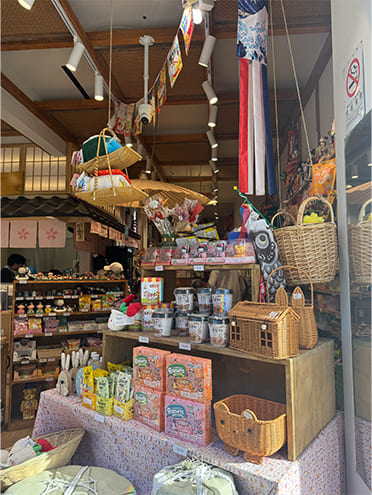
Even today, you can still catch remnants of that logistics bustle at certain times of day, though the neighborhood has transformed overall into one that is meant to be on display. There are more shops selling Pokémon and other cards and figurines, adding a pop culture element that gives the area an even more multifaceted character.
One of the shops that has popped up in the midst of all this change is Mini Kombini.
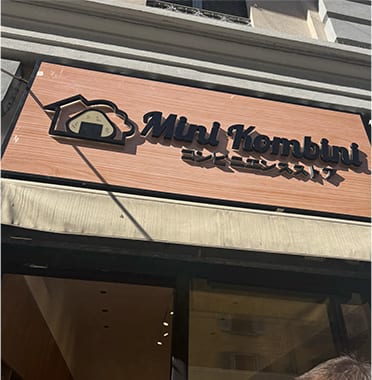
For people familiar with Japanese-style convenience stores, the word kombini conjures up a kind of cozy familiarity. There’s the reliable feeling of knowing you can grab the same product at the same price, no matter which store you enter—where even a rice ball is sure to have the same neat packaging and same quality.
It’s not just the products themselves, but the comfort of knowing you’ll find something familiar—kind of like the feeling of knowing that a McDonald’s is likely to give you a similar experience anywhere in the world.
The appeal of convenience stores, I think, is that things there don’t change. People keep returning to get the same quality and the same familiar feeling. They also add a dose of adventure, knowing that you may find a seasonal or limited-edition item. In other words, because they always deliver what we expect, we tend to naturally reach for the new things that are sitting next to what we know.
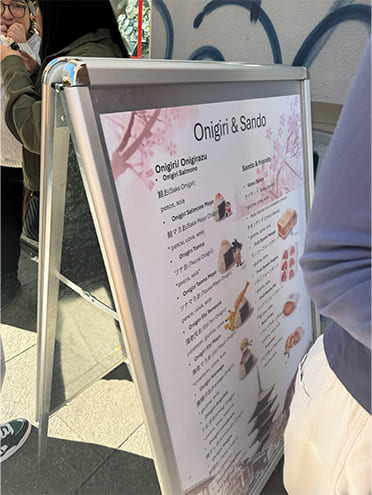
When I visited the Mini Kombini in Via Sarpi recently, I felt like something was missing—and it was probably that to me, it didn’t seem to deliver these core elements of a Japanese convenience store. It felt more like the shop was trying to ride the wave of recent changes in the Via Sarpi area.
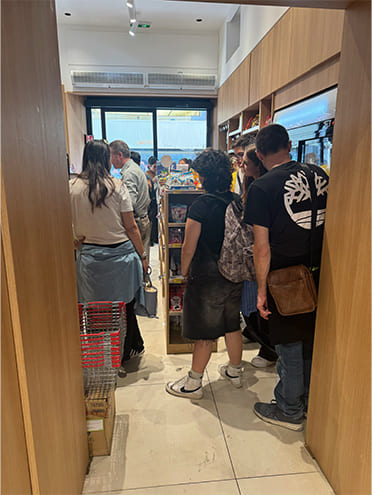
But that familiar, reliable experience coupled with little surprises that Japanese convenience stores deliver probably isn’t what Italians are really looking for. This may be why a place like Mini Kombini, with its slightly blurred identity, came to exist.
I wonder if there’s even a need to create that Japanese sense of everyday familiarity coupled with little discoveries in a place like Via Sarpi, which is constantly changing and full of energy.
Perhaps the answer to my question has yet to take shape in this neighborhood.