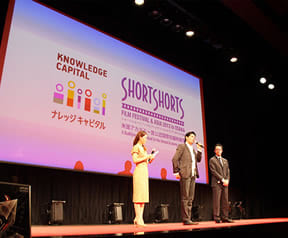







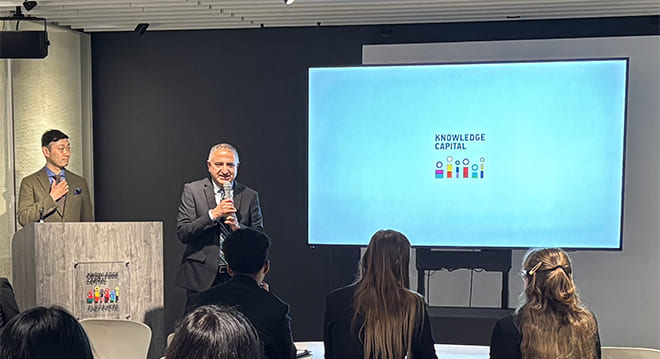
I have spent much of my career visiting universities, incubators, corporate innovation centers, startup hubs, research parks, and entrepreneurship ecosystems. Knowledge Capital shares characteristics with all of them. However, it does not feel quite like any of them. Despite four excellent visits to Knowledge Capital, I find myself struggling to explain exactly what it is that makes the organization so distinctive.
In fact, one of my biggest challenges has been explaining Knowledge Capital to students before they visit. The first time I brought a group to Osaka, I described it as an innovation center. That seemed reasonable enough until we got there. Then I started calling it a startup hub. Later, I tried describing it as a university-industry collaboration platform. None of those descriptions were wrong, but none of them felt like I was doing full justice either.
It took me several visits to realize that I was thinking incorrectly. I was trying to force Knowledge Capital into an existing category when its real value comes from existing between categories. In strategy, we often talk about "white space" opportunities. These are spaces that emerge between established industries, business models, or organizational forms. In retrospect, Knowledge Capital may be one of the best examples of white space that I have ever encountered.
Part of what makes it difficult to describe is that it seems to sit at the intersection of several different worlds at once. There are elements of a university research center, aspects of a community gathering space, startup and entrepreneurial activities, corporate innovation initiatives, educational programs, and local community events. None of these alone defines the organization, yet all of them are present.
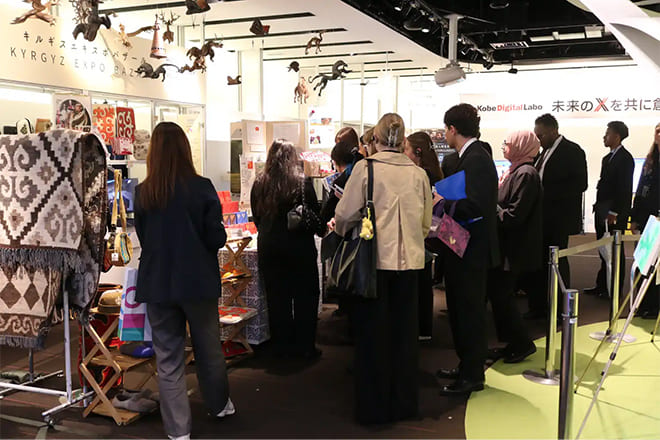
The more times I visit, the more convinced I am that this combination is intentional. Knowledge Capital is not trying to be the best incubator in Osaka. It is not trying to be another university research center or another startup accelerator. It is taking the very best pieces of all the above entities and creates opportunities for people from very different backgrounds to interact with one another in ways that might not otherwise happen.
That may sound like a simple objective, but I have come to believe that it is quite difficult.
In the United States, networking is usually associated with a specific goal. We attend events because we want a job, a client, an investor, a business partner, or some other defined outcome. There is nothing wrong with that approach. Most of us are busy, and purposeful networking can be extremely valuable in helping us achieve our goals.
However, what struck me at Knowledge Capital was that many of the interactions seemed to begin from a different starting point. The emphasis appeared to be less about achieving a fixed outcome and more about creating opportunities for interesting conversations to occur. That distinction may sound subtle, but it makes a world of a difference. A Japanese phrase most commonly associated with Knowledge Capital is omoshiroi. The closest translation is probably "interesting”, or “curious”, but that does not fully capture the spirit of the word. Omoshiroi carries a sense of both curiosity and discovery. It reflects the idea that something unconventional and unexpected may emerge when people engage with ideas and individuals that are different from themselves. The reason that Knowledge Capital is so unique is that it seems built to let omoshiroi emerge from unexpected inetractions.
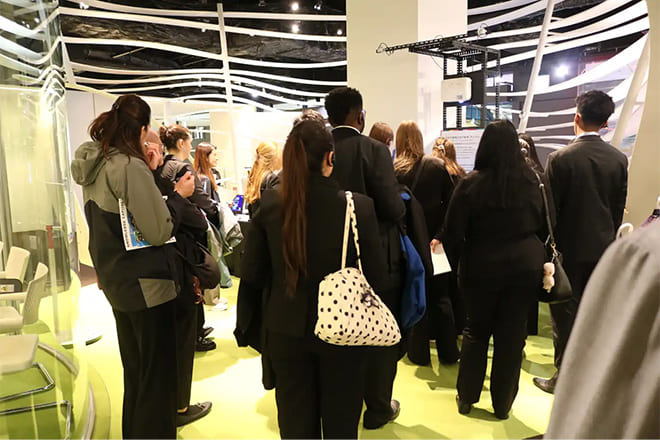
As a US-based business school professor, I spend a lot of time discussing innovation ecosystems with students. We talk about products, ideas, technologies, business models, market opportunities, competitive advantages, and entrepreneurship. All those things are important, and yet after four visits to Knowledge Capital, I have found myself thinking more about the social foundations of innovation. Before ideas become products and before ventures become companies, people need opportunities to meet, exchange perspectives, and challenge one another's assumptions. Knowledge Capital seems organized to do just that.
What has also fascinated my students is the role that major Osaka-based corporations play in supporting the organization. Someone inevitably asks why large companies would invest resources in a place where not every conversation has a measurable outcome. It is a reasonable question, especially from students who have been trained to think about return on investment and performance metrics.
After many visits and thinking, my own interpretation is that the organizations supporting Knowledge Capital recognize something that is difficult to quantify. Strong communities create strong innovation ecosystems, and strong innovation ecosystems eventually benefit everyone involved. Not every conversation needs to produce a successful startup. Not every interaction needs to result in a commercial partnership. Yet over time, the collective effect of these connections can be significant.
Chicago also has outstanding entrepreneurship organizations, including 1871 and numerous university-affiliated innovation programs, including the Coleman Entrepreneurship Center at DePaul University. These organizations have helped build a vibrant startup community. Yet I often leave Osaka feeling that Knowledge Capital is pursuing a somewhat different objective. Many innovation organizations focus primarily on helping ventures succeed. Knowledge Capital appears interested in helping relationships succeed. The startups, technologies, and collaborations emerge from those relationships rather than serving as the sole purpose for creating them.
Perhaps that is why I still struggle when students ask me whether I have seen something similar elsewhere. There are organizations around the world that share individual pieces of what Knowledge Capital does. Some are stronger incubators. Some are larger research parks. Some have more funding or greater international visibility. Yet I have not encountered another organization that combines so many different functions while remaining remarkably difficult to categorize.
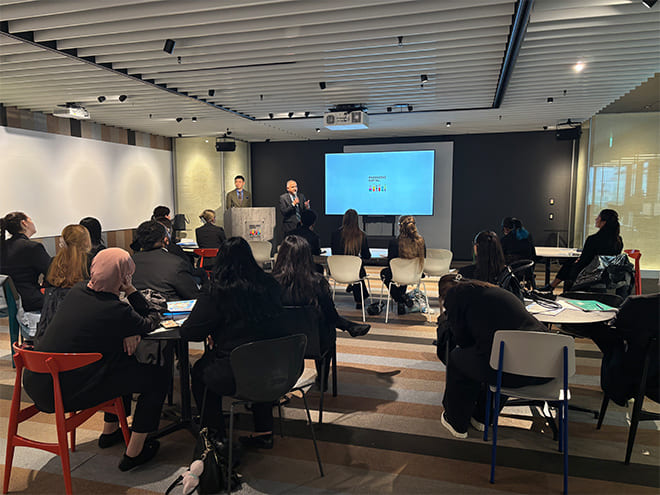
In some respects, that uniqueness reflects Osaka itself as a friendly and entrepreneurial city that is open to ideas from all over the world. In other respects, I think it reflects something that many cities around the world need more of. We spend a great deal of time and money discussing how to build innovation ecosystems, revitalize communities, support entrepreneurship, and strengthen connections between universities and industry. Knowledge Capital offers an intriguing example of how those goals might be pursued simultaneously rather than separately.
After four visits, I still find it difficult to explain exactly what Knowledge Capital is. Oddly enough, that may be the best evidence of its success. The organization occupies a space that most of us assume does not exist. It creates opportunities for conversations that may or may not lead to anywhere specific, while recognizing that some of the most important innovations begin with people simply finding one another interesting.
That lesson has stayed with me far longer than any presentation, technology demonstration, or startup pitch. It is also the reason I suspect I will continue bringing students back to Osaka and to Knowledge Capital for years to come.