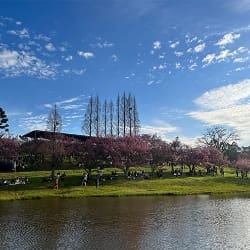







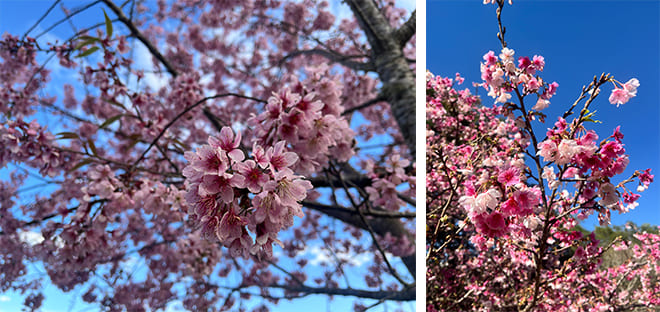
Since the start of winter this year, we have had many sunny days, making it very pleasant to go out to events, and every photo of the cherry blossoms against the blue sky turned out beautifully.
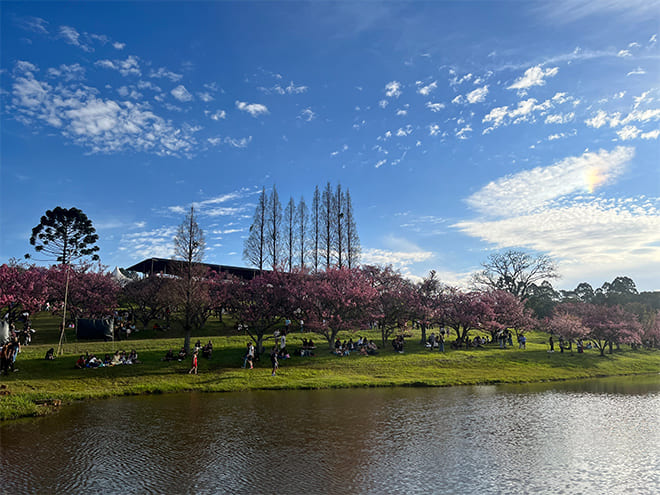
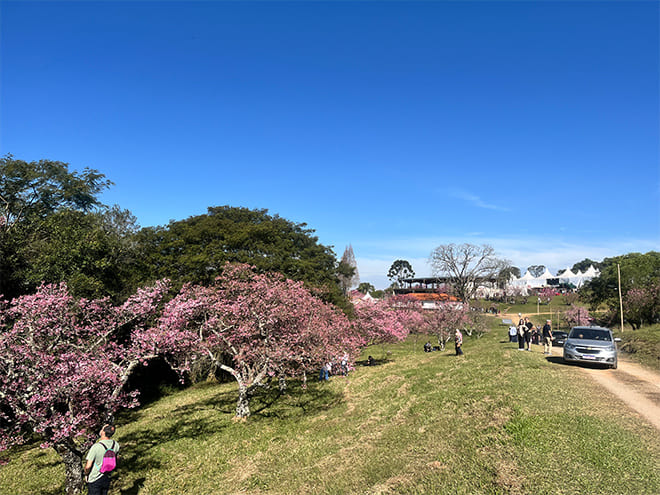
Bunkyo Kokushikan Park is located in São Roque, a city about 55 km from São Paulo. The 580,000-square-meter park is home to more than 1,000 planted cherry trees. The park has dark pink Okinawa cherry trees, large Himalayan cherry trees whose flowers have red centers, and pale pink Yukiwari cherry trees. There is also a lake, making it a beautiful and peaceful place.
In Brazil, cherry blossoms bloom in July, and the Cherry Blossom Festival is held to coincide with that season. The festival is co-hosted by the Brazilian Society of Japanese Culture and Social Assistance (Bunkyo) [H2.1]and the Brazilian Ministry of Culture. It is known not only as a place to enjoy cherry blossom viewing, but also as an event that introduces Japanese culture. This year marked the 29th edition of the event.
Cherry trees are also planted along the path from the parking lot to the venue, so even at that point, we kept stopping to take photos and admire the blossoms, and it was hard to move forward.
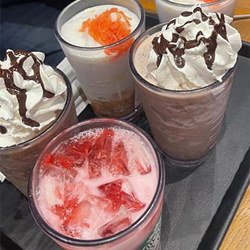
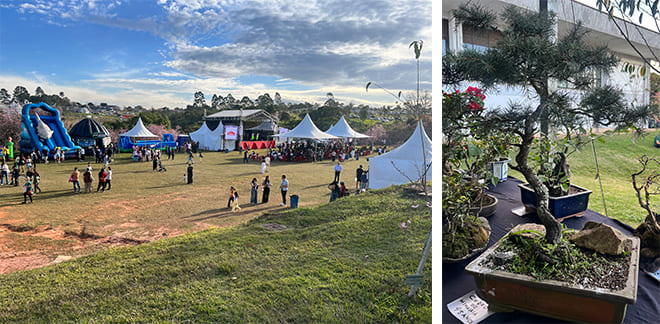
The food and drink area was divided into three sections. In addition to Japanese foods such as yakisoba, tempura, gyoza, hand-rolled sushi, ramen, udon, onigiri, bento box meals, and mochi, there were also Italian, Portuguese, and Korean dishes.
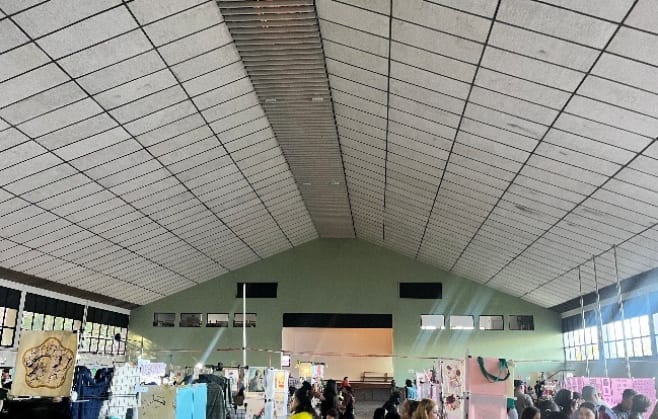
There was also a bazaar area selling handmade items. The items included ceramics, bonsai, sashiko needlework, pressed flowers, calligraphy, origami, and pieces made from fabric. Since events like this are meant to be enjoyed throughout the day, there was also a play area for children, along with playground equipment. Visitors can take part in and watch all kinds of activities, including shogi, tea ceremony, singing, Japanese taiko drum performances, judo and kendo demonstrations, and a cosplay contest. In the evening, a lantern floating ceremony is held on the lake. In 2025, the Cherry Blossom Festival reportedly attracted 60,000 visitors over four days.
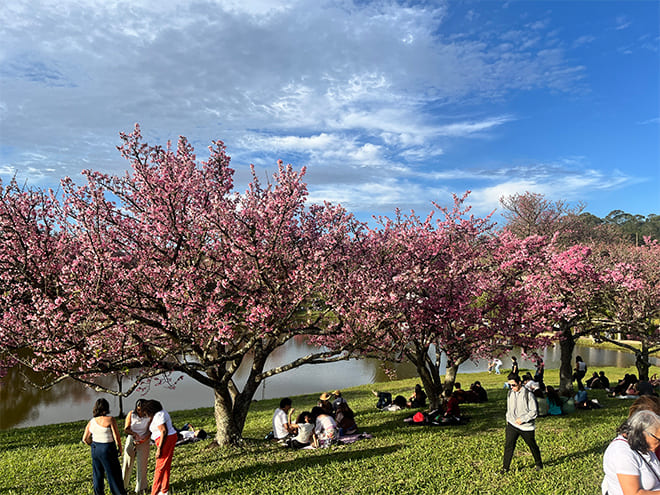
The Cherry Blossom Festival itself is held over two weekends, but visitors can also enjoy hanami on weekdays during that period. [H3.1]That’s right: hanami, one of Japan’s cultural traditions. Visitors can have a picnic with friends and family while enjoying the cherry blossoms. Moments like that may make you feel as if you were in Japan.
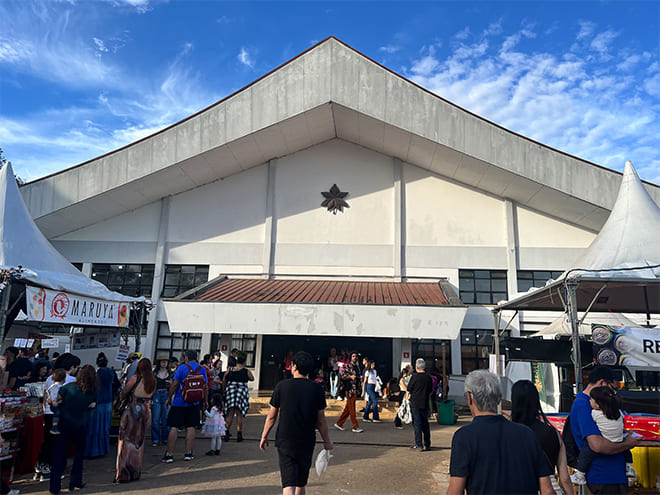
There is a reason the park’s name includes Kokushikan. In the 1980s, Kokushikan University in Japan reportedly purchased the land with the aim of building a university there to teach martial arts. There was actually a large gymnasium on the site. However, in 1996, due to management issues, the plan could not be realized, and the following year the land was donated to the Brazilian Society of Japanese Culture and Social Assistance (Bunkyo).
Since then, Bunkyo has maintained the park, including planting cherry trees. The impressive gymnasium is apparently still used today for teaching martial arts.
It is truly wonderful that beautiful cherry blossoms can be enjoyed in Brazil as well. The fact that future generations will be able to continue enjoying these cherry blossoms means that Japanese culture will continue to have a place in Brazil. This is thanks to all the people who have been involved with this park. I am filled with gratitude.