






The building is called Casarão do Chá, which means “Tea House.” As soon as I learned what the name meant, I knew it must have been built by Japanese immigrants.
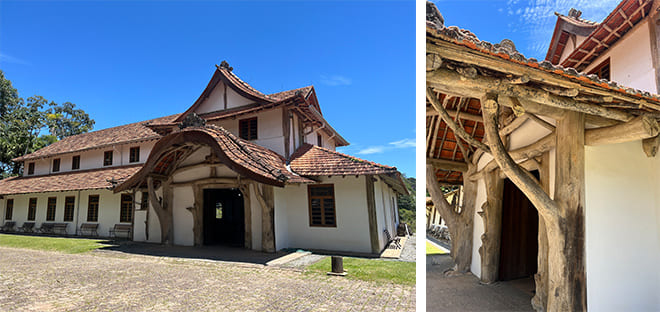
Located on the outskirts of town, Casarão do Chá stands quietly surrounded by greenery. It’s a beautiful building, and although I’m not an expert, I found myself taking a close look at its structure from the outside. The more I looked at it, the more I noticed the intricate details, and the more fascinated I became.
Casarão do Chá was built in 1942 by Kazuo Hanaoka, a Japanese immigrant who was both an architect and a carpenter. It was originally built as a factory for producing and processing tea grown in Brazil. The building was constructed using a traditional Japanese method in which pieces of wood are fitted together. No nails or screws were used, and it was apparently built with eucalyptus wood. The walls were made with bamboo and several layers of earth. Even today, some of the machinery used in the factory is on display.
It served as a tea factory until 1968, but it was abandoned for many years after being used as a warehouse.
Thanks to the efforts of Japanese ceramic artist Akinori Nakatani and the Japanese-Brazilian community, a movement to restore and preserve the building began. After 17 and a half years, in 2014, it was restored into the striking, beautiful structure we see today. The restoration project received funding and support from Brazil’s federal government, the São Paulo state government, and the city of Mogi das Cruzes. It was apparently a major project, even involving carpenters brought over from Japan.
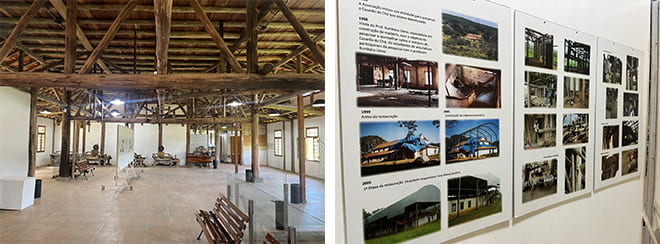
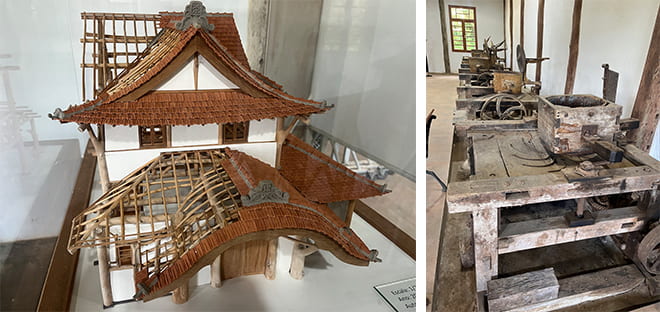
Inside the building, there were panels describing its history in detail. There were also panels with photographs documenting the restoration work. I had no idea that such a large project had taken place so close to São Paulo, only about an hour away by car, and that the building had been restored into such a wonderful place.
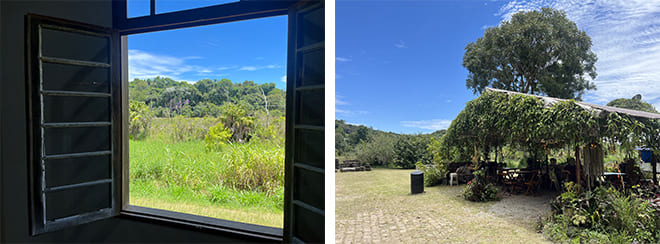
Today, the tea fields are gone, replaced by trees and grass. On the premises, there are places where visitors can sit and rest. Every Sunday, vendors selling handmade crafts, light snacks, and drinks set up stalls. Surrounded by nature, it is a place where you can relax. I imagined the tea fields that once stood there and felt a little sad that I could no longer drink that tea.
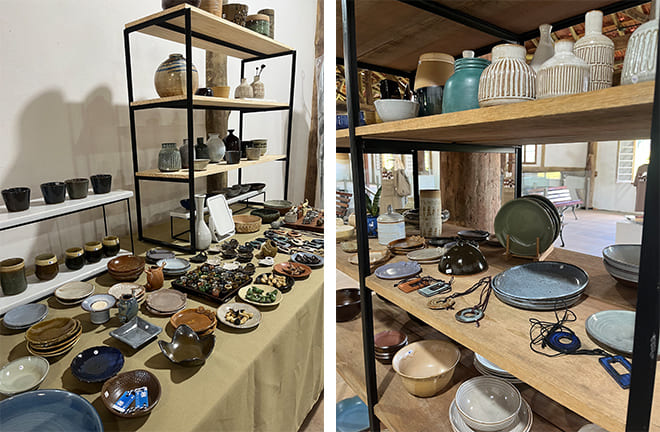
Today, the building is used as a multipurpose cultural facility, and a ceramics festival is held there every weekend in August. In addition to selling ceramics, visitors can join a pottery workshop. A ceramics bazaar is also held in early December.
In June, the site also comes alive with gatherings of vintage cars. Various other events are held here as well, including singing, instrumental performances, and tea tastings.
I hope more people will come to know this wonderful building. My whole family felt relaxed spending time there, and it also gave us an opportunity to talk about the experiences of Japanese immigrants, making it a fulfilling experience in many ways.