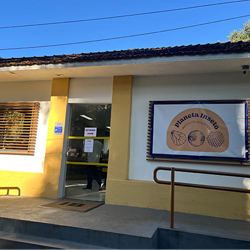







The place that lets you see something so unique is Planeta Inseto, the Planet of Insects.
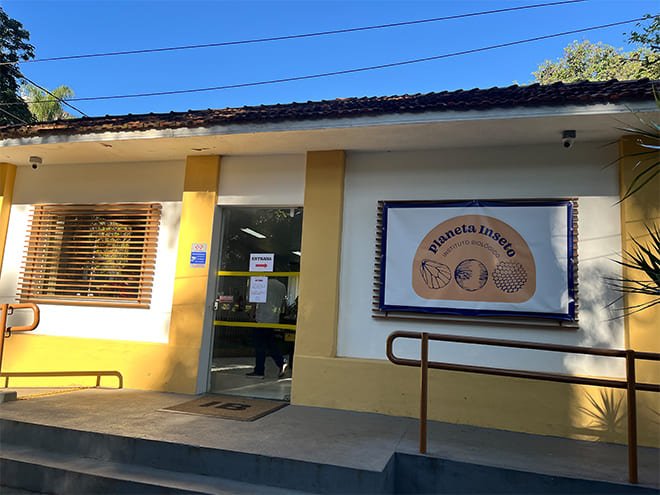
In São Paulo, there is the Biological Institute Museum (Museu do Instituto Biológico), and on its grounds is Brazil’s only insect museum, called Planeta Inseto, or the Planet of Insects. The building is not large, but it is designed so both adults and children can enjoy learning about the world of insects.
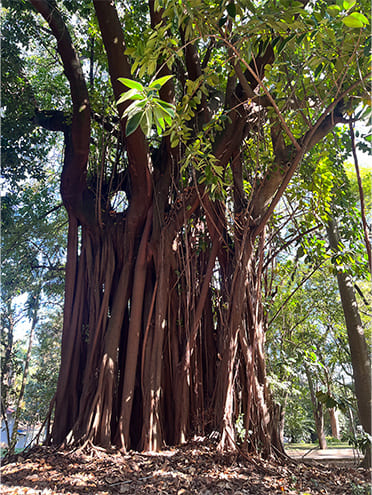
Once you enter the grounds of the Biological Institute, you find yourself in a quiet, green space that makes it hard to believe you are still in São Paulo. It made me want to take a leisurely walk. There was a large rubber tree, which left a strong impression on me.
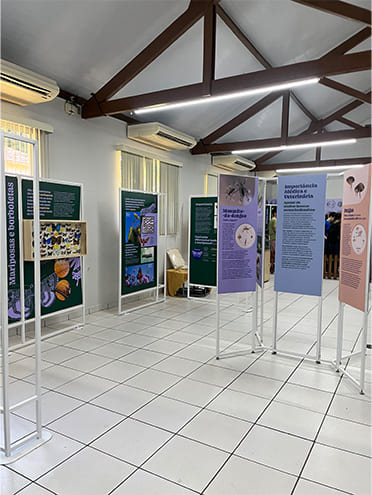
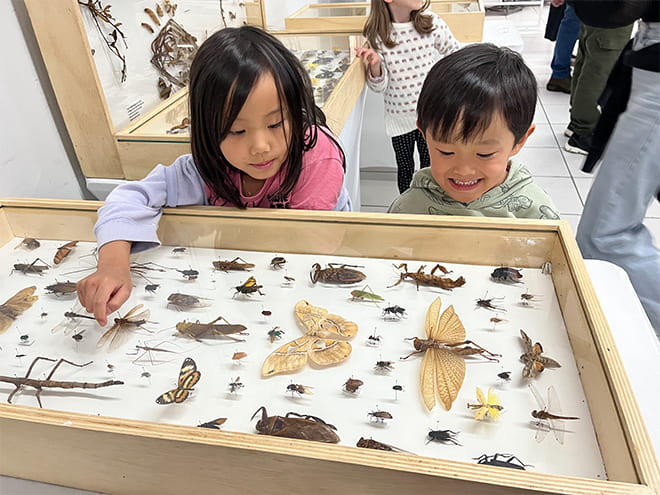
Inside the exhibition room, there are several panels introducing various insects. There are also insect specimens. The specimens are displayed at a child-friendly height, much to the delight of the children. They were full of curiosity, pointing at insects and butterflies they had seen before and looking for ones they wanted to find.
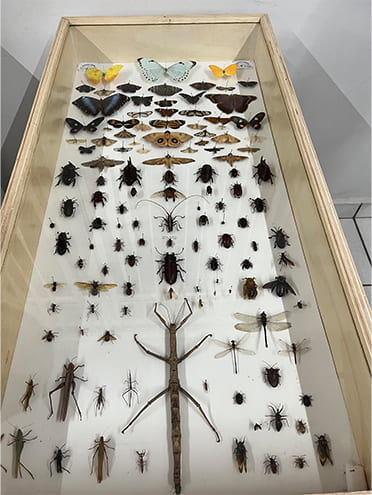
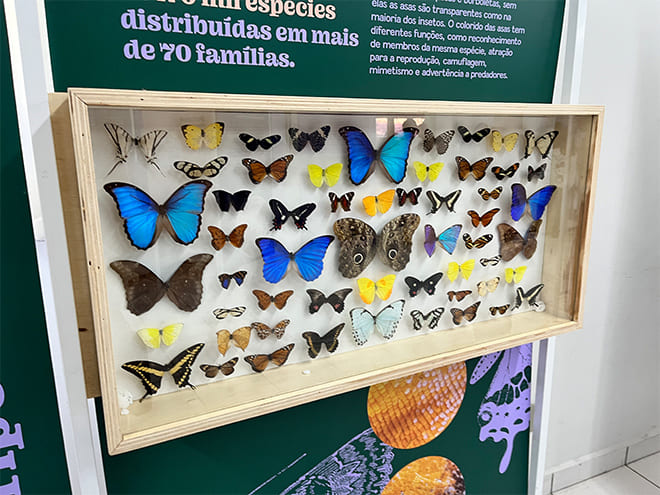
The morpho butterflies native to Central and South America are beautiful, with their metallic blue shine. I learned that the blue color of their wings is not because they have blue pigment, but rather created by structures on the wing surface reflecting light. I learned something new. The morpho butterfly is said to be one of the world’s three most beautiful butterflies. It really is a beautiful butterfly.
There were also explanations about honeybee nests and how silkworms make thread.
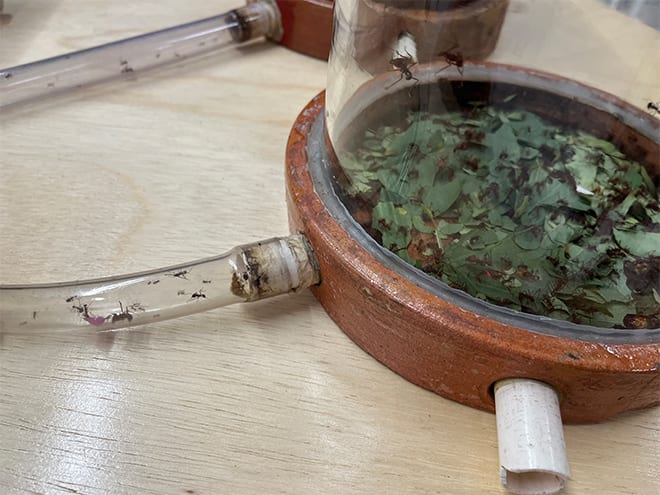
You can observe termite activity as well. The children seemed to enjoy watching them carry leaves and observing the directions they moved in.
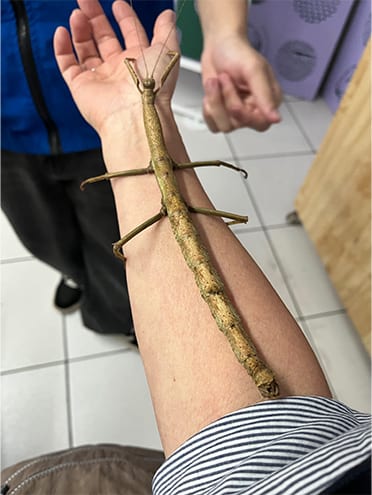
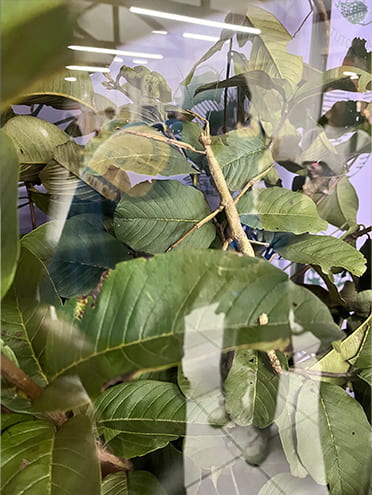
I noticed people lining up and went to see what it was for. It turned out they were waiting for a chance to have a stick insect about 25 cm long placed on their arm and touch it. Stick insects really are long and slender. The staff let visitors observe the stick insect’s movements and gave various explanations. They explained the differences between females and males. They said males are smaller and thinner and have wings, and then showed us by spreading the wings. Apparently, some species of stick insects do not have wings. Still, it is amazing how much they really look like branches. I was told that stick insect eggs are laid on the ground. The eggshells are hard, so they do not break.
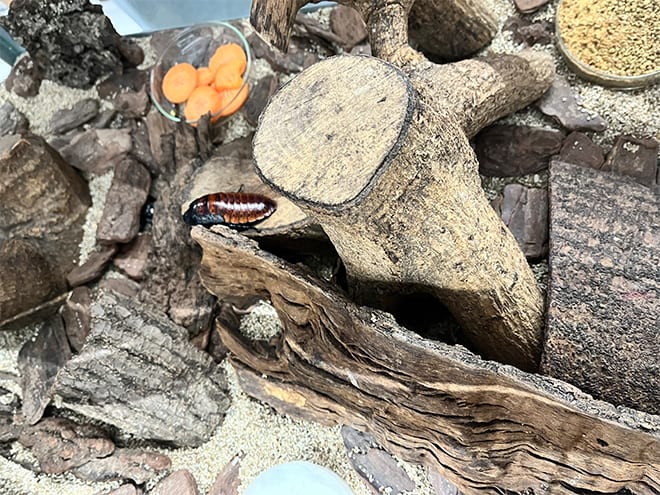
The insect the children were holding nervously in their palms was the Madagascar cockroach. It is about 6 cm long, and unlike the cockroaches we see in town, it has no wings and has a glossy brown body. When I think of cockroaches, I imagine them scurrying away quickly, but Madagascar cockroaches move slowly. They live on the forest floor and hide under fallen leaves and logs. Just hearing the word “cockroach” gives me goosebumps, but while listening to the explanation, I was able to observe how the Madagascar cockroach moved.
At the end, they show visitors a race featuring urban cockroaches. Before that, they talk about foods cockroaches like and places they like, explaining things by asking children quiz-like questions. The race is simply a few cockroaches running along a narrow course about 1 m long, but the children cheered hard and seemed to have a great time. Still, if a cockroach escaped, I imagine it would cause quite a commotion.
I am not especially fond of insects, but I enjoyed it more than I expected and learned a lot.